Latest

Anhinga Trail

Anhinga Trail – The newest print available at MacStonePhoto.com

There are only a few places I’ve been for bird watching that rival the Everglades’ Anhinga Trail. This isn’t one of my “secret spots,” either. I’m pretty sure every tourist from New York to California knows that in the dry season, this small section of boardwalk and previously-quarried pond offers front row seats to the wading bird and alligator show. As fish are bottle-necked into the deeper waters they stand little chance against the patience and sharp bills of the herons and anhingas which line the banks.

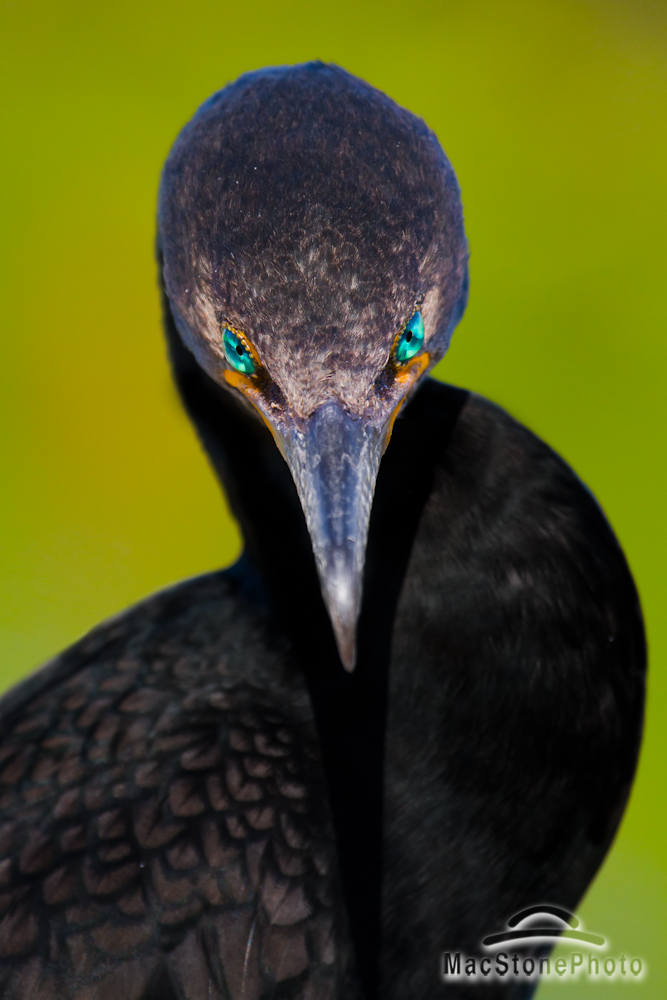
Double-crested cormorant
I normally drive past places like this because of the crowds. It’s hard for me to justify making a trip out to the third largest national park in the lower 48 that encompasses 1.5 million acres only to share personal space with strangers. Photographers line the boardwalk trying to keep their tripod legs from getting bumped by passing strollers while large groups of boy scouts, girl scouts, Europeans, Asians, and tour groups make their excitement audible. It’s not such a bad thing, though. Sharing, that is. In fact, it’s the constant stream of visitors that make this place so unique. 
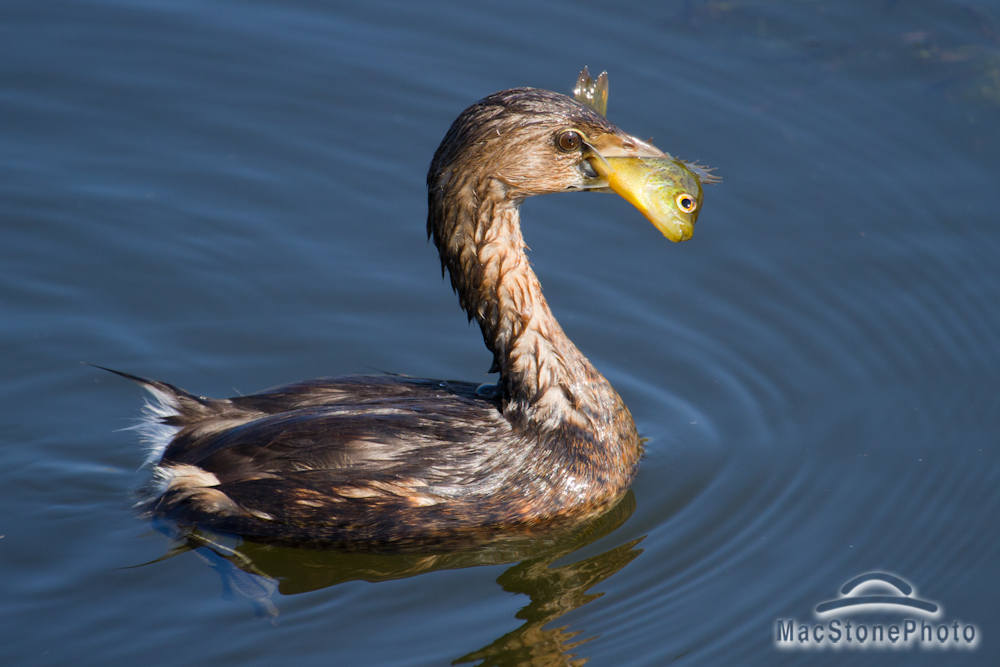
Pied-billed grebe with a dollar sunfish
The birds are so accustomed to people they have no fear of courting, foraging, or displaying right in front of a lens. Sometimes, it seems that because I’m there with a camera, they put on their best show. 
Green heron
Within 20 minutes of visiting last week I saw great blue herons, woodstorks, purple gallinules, american coots, white ibis, green herons, pied-billed grebes, great egrets, snowy egrets, little blue herons, tri-colored herons, cormorants, and of course, anhingas. Oh and I almost forgot: the black vultures. Probably the least photographed bird at the park, these unloved bottom-feeders of the system will do anything for attention. With unnerving bravado, they bark, grunt, and even steal your lens caps simply out of spite. The vengeful vultures, so upset with their lot in life, have resorted to crime and pillaging. These gothic mongrels of the sky will chew the weather sealing of your car doors and windshield wiper blades while you’re away taking pictures of other, more colorful birds. 

Anhinga or “snake bird” in breeding plumage

If you happen to be in South Florida or the Everglades during the dry season, I would say Anhinga Trail is a must-see. While it might not be the ideal place for peaceful solitude, it is the premier spot for close encounters with birds and alligators. Just make sure you park your car at the far end of the lot.

Wallpaper for your desktop

Two months ago a fellow photographer and friend of mine, Neil Losin, had a feature article in Birder’s World magazine about burrowing owls. The editors used one of my images for the opening spread and we stayed in touch over the winter. Just recently, they changed their name to Bird Watching Magazine and contacted me about using a few of my images for their members to download as wallpapers. If you’d like access to these photos and other great bird photography check it out! And wait… the best part… is it’s totally free!

One of the photos available for download with Bird Watching Daily

Fisheating Creek

So wait, you thought that I went paddling and camping in this awesome tree, in this incredibly scenic place, and didn’t bother waking up to shoot the next day? Come on now, guys, you can hold me to higher standards than that…

Ok, so I’d be lying if I told you sleeping in the Giving Tree was as romantic and peaceful as it sounds. In fact, I barely slept. Temperatures dropped down into the 40s that night and my hammock offered little protection, especially with wet clothes. It’s bittersweet though, because when I looked at my watch in the pre-dawn, I was more than ready to get my blood flowing, even if that meant having to walk through the cold water to get to my camera gear. Giddy, because there’s nothing like photographing a swamp in the fog, I jumped in my kayak and headed out for the morning.

There were so many seductive landscapes, I could barely contain myself. As the sun glowed over the creek, I could feel the energy pulsing through the trees. This is a magical place.
After eating breakfast and loading up the kayaks, we headed downstream and explored along the exposed banks. With water levels low, it made for some very dramatic landscapes. 
It stayed cold most of the day, so I wasn’t surprised not seeing many reptiles. Only a couple of snakes managed to poke their heads out, trying to see if it was worth leaving the warmth of their cypress tree. 
Only an anhinga dared to brave the cold water for a meal.

Science Friday!

I’m a pretty big NPR nerd. I subscribe to many of their podcasts and most mornings I’ll wait in the parking lot at work just to finish listening to a story on the radio before going in. Not only are they a class-act organization, they bring so many services at no cost to the consumer. Programs like Science Friday, This American Life, Car Talk, and Wait Wait Don’t Tell Me are all available for download and I would highly recommend any one of these for you non-believers.

Many of you may remember the burrowing owl video I posted back in December of 2010. I received so many positive comments and I really appreciated all of you who forwarded the video on to your friends and family. One “Anonymous” commented on my blog that I should submit the video into NPR for their Science Friday weekly showcase. If you’re reading this, thank you for the suggestion.

Just this afternoon NPR called me for an interview while posting the video on their webpage. It was a short interview, but the exposure was great. I was so thrilled to hear from friends in California, Texas, North Carolina, Florida, and South Carolina that they heard the program.

For anyone that missed it and would like to hear the interview and see the video again, here’s the link.

NPR Science Friday – Creature Feature (look at the lefthand side of the page for the audio file, my section is halfway through).

The Giving Tree

Adam Sittler, a swamp-stomping yankee in training

Adam Sittler planned to visit me for only a few days before flying down to Honduras and Belize. Due to health complications, however, he’s been forced to stay in the Florida Keys for three weeks (harsh alternative, I know), completely foregoing his trip to Central America. While I was at work during the week, he found the energy to accomplish many things which I’m embarrassed to say that I’ve neglected to do in my year and a half of living here. To name a few, he’s driven down to Key West, he’s read a book on a private beach, he’s captured invasive pythons with my herpetologist friends, and he’s collected exotic chameleons outside the Everglades resulting in a surprise assault of SWAT-geared police officers with guns drawn at 1:00 in the morning (great story).

When Saturday came, the pressure was on to find a place worthy of our weekend all while keeping up with the caliber of adventure Adam already established. Not that I was willing to involve the police, but we all wanted to get our heart rates up. I must say that I have the coolest, most positively enabling friends, because when the only idea I came up with involved driving 3.5 hours to a place I’d never been before, arriving at dark, and paddling for who knows how long until finding a place to hang a hammock, I wasn’t met with any “what ifs” or “I don’t knows…”. Instead, both Sittler and Adam Chasey jumped on the plan (or absence of a plan, rather) without hesitation.

Sunset over the Tamiami Trail 

When Sittler got out of his last doctor’s appointment at 3:00 PM we picked up Chasey and headed for Fisheating Creek. After loading up kayaks, hammocks, and enough photography equipment to rival a national geographic expedition, we set out on the road. The sun was already setting over the Tamiami Trail and we were still two hours away from our destination. Passing the endless agricultural expanses we watched the sugarcane fields blazing in the distance which added to the looming uncertainty of our trip. It felt like a scene out of some Cormac McCarthy book.

Sugarcane fields during a controlled burn

We finally arrived at the park by 8:00 PM and unloaded the boats and gear, staring out into the darkness with only the twinkle of starlight and alligator eyes reflecting on the water. The only form of compass we had was the knowledge that there was a tree somewhere along the creek where we could set up camp. That’s it.

Kayaks stocked to the brim, we set out around 9:00 after waterproofing everything

With so few expectations it’s incredible how overwhelmed and surprised you can be. I’m a big proponent of planning, but an even bigger advocate of spontaneity. Navigating with our headlamps we were only allowed partial glimpses of the landscape and the winding creek obscured each turn with anticipation. Bald cypress trees, denuded from the cold winter, lined the banks. Their spindly knees reached out into the black water, some so large you could paddle beneath them. Every tree could have been the tree we were looking for.

That’s what we kept saying at least, until we found The Tree.

The Giving Tree, as I call it, during a 2 minute exposure, illuminated with flashlights

There was no mistaking that this is where we were meant to camp. A white sand beach, exposed from the dropping water levels, offered front row seats to what would become a two-hour endeavor to illuminate the iconic cypress and its fortress of knees with flashlights while our cameras recorded the ensuing madness. By 1:00 AM we exhausted ourselves and our batteries. As the adrenaline wore off, we started feeling the cold gnawing at our toes so we sought refuge in our sleeping bags. The temptation was too great to ignore, so I climbed up the tree and hung my hammock between two branches, dangling like another epiphyte. Just before going to sleep I considered the headline in the morning paper, Camping trip comes to a gruesome end as young man is empaled on cypress knee. Perhaps that’s what it would take to have my photo on the front page of the Palmdale tribune, but thankfully, my normal sleeping acrobatics subsided for the night.

Another camping trip added to the list of unforgettable adventures.

Mystic River

Bob Key in the Florida Bay
Across the aqua greens of the Florida Bay a winter horizon brews up an ominous front. The water is unusually calm considering the rapid shifting of these tectonic clouds, easing the bouncing bow and the clank of our anchor. Still rubbing the sleep out of my eyes, I start considering the adventure ahead and my excitement builds. Passing mangrove islands, our wake leaves a fading trail northbound to Little Madiera Bay and the mouth of Taylor River. 

Tillandsia clings to a mangrove branch on Taylor River

Three days out of every month, coworker Adam Chasey and I make the hour and a half trip to this restricted area of Everglades National Park as part of our research. One of the most intact and directly undisturbed areas in the park, Taylor River is a truly magical place. Only accessible by boat and following a seemingly unrecognizable path, the brackish water carves through mosaic mangroves and empties into a series of small lakes. Along the banks of these cold winter days, American crocodiles, an endangered species, bask in the sun ignoring the hum of our motor.

American crocodile on the first lake of Taylor River

Boating along, schools of mangrove snapper and snook dart from underneath prop roots while anhingas clumsily fall into the water to evade our foreign vessel. The cacophony of herons and egrets overpower our motor as we enter their secluded communities. Upstream, small spherical boils break the water’s complexion followed by the exhausted sighs of a manatee coming up for air.

A manatee breeches the water’s surface as it comes up for air.

Soon the river narrows and disappears into a dense wall of foliage. Full speed ahead, Adam points the bow at a small cave-like hole shrouded by rogue limbs. Bracing for impact, I wince, but instead we plunge into what’s known as the Long Narrows. He brings the motor to a soft hum and opening my eyes the sky is gone and the adrenaline surrenders to wonderment as we start drifting through a prehistoric passageway. It’s as if we pulled off the interstate at rush hour and immediately exited onto a wooded country road. Moccasins as thick as my forearm sit on top of the water waiting for their breakfast to swim by. 
Water moccasin or cottonmouth as it’s also called, waits in the prop roots of a mangrove for food.
Sound, as well as time, seem to be trapped here. Ever since the oceans receded and our enigmatic state emerged, water became the writer of history. For decades we have tried to manipulate and coerce this aqueous renegade to bend and flow to our needs without much consideration as to what happens downstream. As our understanding of this complex system grows I hope we will realize the biological wealth that this incredibly diverse area offers and strive to protect it on all levels. We must acknowledge that in the heart of the Everglades, the pulse of life is indeed a mystic river.

“Mystic River” a new print available through MacStonePhoto.com

Good morning

Sunrise on the Florida Bay over Islamorada

February, it’s so great to see you again.

Dry Season

Seasonal fluctuations between June 2010 and January 2011

The winter is a strange time for Floridians. At least three times out of the year we look to our fellow Americans for commiseration when we have to scrape the ice off our windshields before going to work. Instead of empathy and solidarity, I get “You have no idea what cold is.” Just once though, I would like to hear “Oh, man, I know, it’s brutal isn’t it?” I am reminded constantly by my northern friends that I shouldn’t complain about 40 degree mornings and that they don’t consider Florida really even having seasons. I mean how can a state that’s only 1,600 miles from the equator be affected by the earth’s axis, especially if this state only consists of four biomes: Miami, Disney World, beach, and golf course?

Well, for all those non-believers out there, here’s my rebuttal. This past weekend a college friend from New York, Adam Sittler, escaped the snow and came down to visit. He had never been in a swamp before so I took him to one of my favorite cypress sloughs. He learned pretty quick that the water does in fact get cold down here, as we plunged into a canal, hoping we wouldn’t attract any gators with our splashing.

Canal crossing on the Tamiami Trail

His main goal was to see an alligator “in the wild” as he put it, so I promised him at least fifty before we even got out of the car. This is not a lofty goal along the Tamiami Trail on a sunny winter day. As water levels drop and the mercury falls, reptilian sunbathers line the shores of the canals to warm up before the cold night. Tourists also line the waterways equipped with cameras and binoculars, but Adam specifically required “in the wild,” so we went slogging in hopes of finding an untamed swamp dragon. I didn’t know we would find the strangest looking alligator I’ve ever seen.

I have no idea how this happens, but perhaps this one lost a territory battle… 

All along the way we saw barred owls, egrets, and ibis combing the shallow waters for fish and invertebrates.

Great egret

When we got back in the car, I saw him turn the heat on before reaching for a fleece. This was my silent victory.

Top photo: high water in June 2010
Bottom photo: low water in January 2011

We may not always have harsh reminders like snowstorms that remind us the earth is still spinning but I think that’s why I’ve fallen in love with Florida. There is very little here that is overt; no towering peaks, no deep gorges or valleys carved by glaciers. You have to look hard, and in doing so, you often see so much more.

Until the Fog Clears

Sunrise over Homestead, FL
For the last two weeks, South Florida has been cloaked in heavy fog. It’s funny to think about how insignificant and maybe even unnoticeable this might be for most people as they go to work, but for the boaters, fishermen, pilots, and Audubon field biologists it turns the daily commute into a dangerous guessing game, which is incredibly fun to photograph.
Forced to sit and wait an hour before the fog clears at the mouth of Joe Bay, ENP
The Florida Bay is notorious for being one of the most difficult places to navigate due to unmarked cuts and shallow banks that leave surprised boaters stranded and even severely injured. Throw a thick blanket of fog over the water and forget anticipating a sharp turn or dodging other equally blind captains. Similarly in the air, our helicopter pilot refuses to drop us in an area he can’t see from 800 feet up. Since our data need to be collected within the first three hours of the sunrise, we can’t handle too much deviation from an already strict schedule. Because of fog, a 10-hour day can painfully turn into a 14-hour day. It’s fair to say my love for these low-lying clouds is bittersweet.
Pinelands in the Everglades national Park
Ok, so a 14-hour day is a small price to pay for getting to see the magic of the morning. At 800 feet above the Everglades, fog is a living, moving, breathing thing. It lifts and disperses, embracing the pinelands and dancing across the sawgrass prairies. Varied air currents send ripples across the water vapor in patterns I’ve never seen before.
Just below the fog line the warm sunrise light diffuses into a soft even glow. 
“Egret Fly By” the newest print added to my portfolio. 
On ground level, it’s the perfect backdrop for isolating subjects. 
Burrowing owl in Homestead, Florida
There’s something eerily seductive about fog. It’s the bleak isolation of its veil and intimacy of its silence that speaks to me. I hope you all get the chance to take one morning to explore your woods and prairies while winter still lingers for the next month! 

It’s all about perspective

Parrot Snake – Cangrejal River – Honduras 
Top photo by Jonathan Zoba
One of my New Year’s resolutions is to clean up my image archives. With tens of thousands of photos, it’s a daunting but necessary task. While I have my work cut out for me over the next few months, it’s going to be fun reliving some old adventures. Recently, I came across a folder with some images taken by friends who have accompanied me on my photo outings over the years. Locating the time stamps in their metadata, I paired them up with my photographs taken at the same time from my camera and found some fun juxtapositions. 

Skimmers – Everglades National Park 
Top photo by Hannah Dillard
I love looking back to see exactly where I was when some of my favorite images were taken and thanks to my trigger-happy adventure buddies, I can get a glimpse of the entire moment – not just through my lens. After looking at these combinations, it reaffirms what I’ve always told my students: making powerful images is simple, it’s just all about perspective. 
Barred Owl – Everglades National Park
Left photo by Hannah Dillard

The Jumper – Las Mangas, Honduras
Left photo by Camilo Lopez
Design a site like this with WordPress.com
Get started